

Storytelling-led branding means the story comes before the logo. Before we choose a colour or draw a letter, we find the one true thing about a business that its customers should feel, and then we design everything (the name, the mark, the pack, the shop, the website) to carry it. The design is not decoration on top of the story. It is the story, told without words.
We have worked this way since 2017, when the studio began with a simple motive: to bring out stories in the form of daily objects. That motive turned out to be a method.
A story is not a slogan
When people hear "brand story" they often think of an About page, a founding myth, or a line on a billboard. Those are outputs. The story we mean is smaller and harder: a belief the founders already live by, which can be felt in a product before anyone reads a word.
Bombasi, a clothing label from Mumbai, had spent a decade shaping a belief that getting dressed should feel like coming home to yourself. They called it the balanced being. That idea was already true before we arrived; our job was to make it visible. So the mark is a meditating figure, and the packaging trades plain wrapping for an illustrated Bombay, because that is the home the brand is talking about. Read the Bombasi case study.
The question is never "what should the logo look like?" It is "what should people feel, and what would make them feel it?"
Where the story comes from
It almost always comes from listening. Founders know their story but rarely say it the way a customer needs to hear it, so the first part of any project is conversation: with the founders, with the team, and when we can, with the people the brand is for.
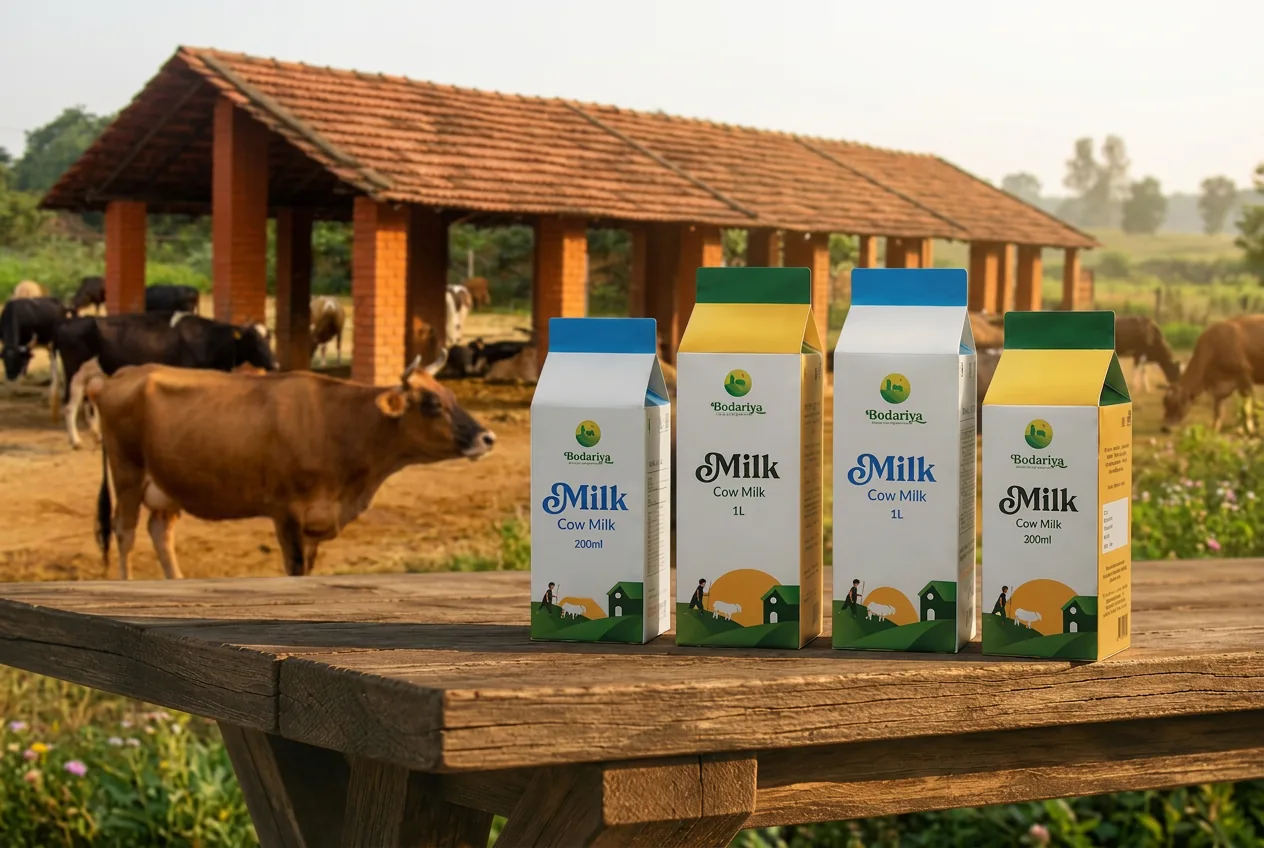
For Sircle, a hospitality brand spread across twelve places, the engagement began with research rather than a logo. What we learned about who the places were for set the tone, the language and even the structure of the website, which is organised around the places themselves rather than the company. For Godariya, a dairy from Dharampur in Gujarat, the story was already there in what the company believed: milk as nourishment crafted by tradition, and the age-old bond between farmers and their cows. We wrote that down before we drew anything.
Turning a story into a mark
A good mark holds the story even when nobody is there to explain it. Some of the ways we have done that:
- Put the whole story in the picture. Godariya's mark has a cow for purity, a farmer for hard work and farmland for freshness. A shopper reads the origin of the milk from across the aisle.
- Make one shape do several jobs. For Lyumic Productions, a Chennai collective, an L flipped and doubled becomes a creative eye; rotated, it is an R for Ram, the founder; rotated again, the flame of a lamp.
- Draw the experience, not the product. Off the Reco is an unscripted podcast, so its logo is a labyrinth: a conversation that weaves and turns and finds its centre.
- Start from a ritual. The Little Bakery makes pastries to be given, so its logo is a little gift box, and every pattern in the identity is drawn from it.
Making the story hold everywhere
A story that only lives in the logo is a short story. The real test is the hundredth touchpoint: a freezer pack, a kiosk, a menu, a pitch deck. That is why most of our projects end in what we call integrated branding, carrying the identity onto everything a customer meets.
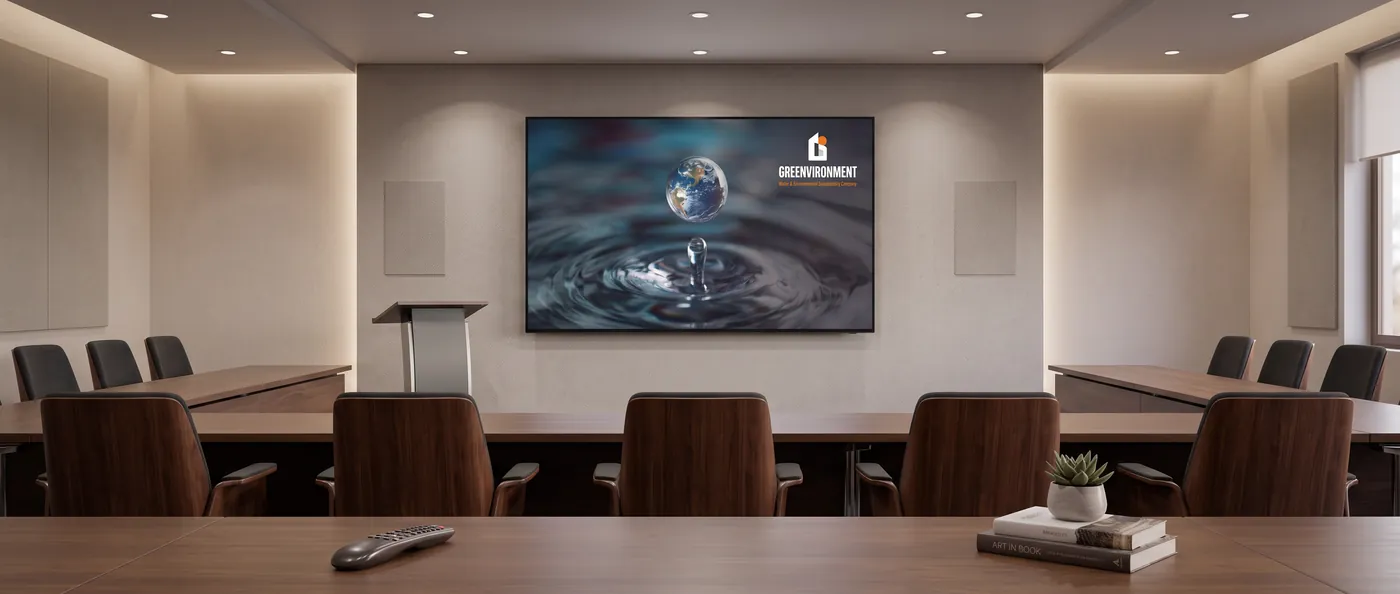
When Godariya launched Go Treat, a sub-brand for fresh and frozen produce, it needed to be louder than its parent and still obviously family. It kept Godariya's letterforms and added a tree. When Greenvironment, a sustainability venture, needed to stand in front of investors, the identity became a deck template its team still uses without us. When a story is clear enough, a team can carry it on its own. That is the goal.
Brand identity or logo: which do you need?
A logo is a single mark. A brand identity is the system the mark belongs to: colours, typefaces, patterns, illustration, photography, tone of voice, and the rules for using them together. If you only need to be recognised, a logo can do. If you need every pack, post, sign and slide to feel like it came from the same place, you need an identity, and an identity needs a story to hold it together.
Does your brand have a story yet?
A few questions we ask at the start of every project. If you can answer them in a sentence each, you have a story. If you can't, that is where we begin.
- What do you believe that your competitors don't?
- What should a customer feel in the first five seconds?
- What is the one object, ritual or place that says who you are?
- Where will people meet your brand most often: a shelf, a screen, a room?
- What would you want a customer to tell a friend?
We are a brand building studio in Chennai, working with founders across India. If you would like help answering those questions, tell us what you are building, or see all our case studies.